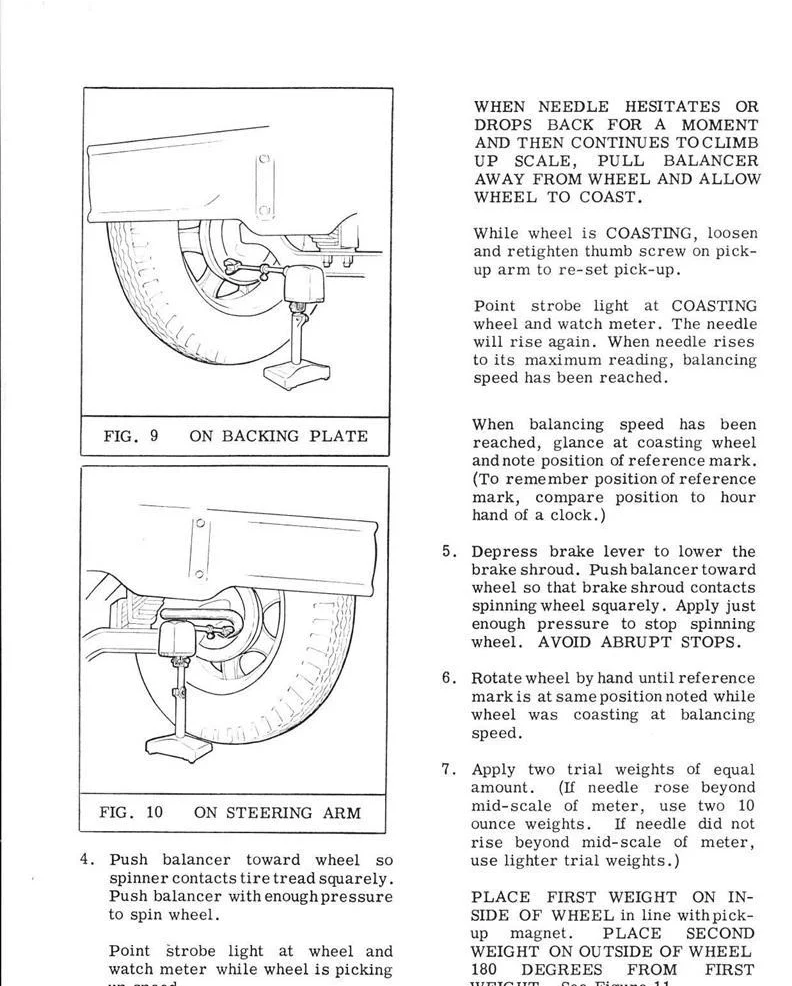
WHEN NEEDLE HESITATES OR DROPS BACK FOR A MOMENT AND THEN CONTINUES TO CLIMB UP SCALE, PULL BALANCER AWAY FROM WHEEL AND ALLOW WHEEL TO COAST.
While the wheel is COASTING, loosen and retighten the thumb screw on the pick-up arm to re-set pick-up.
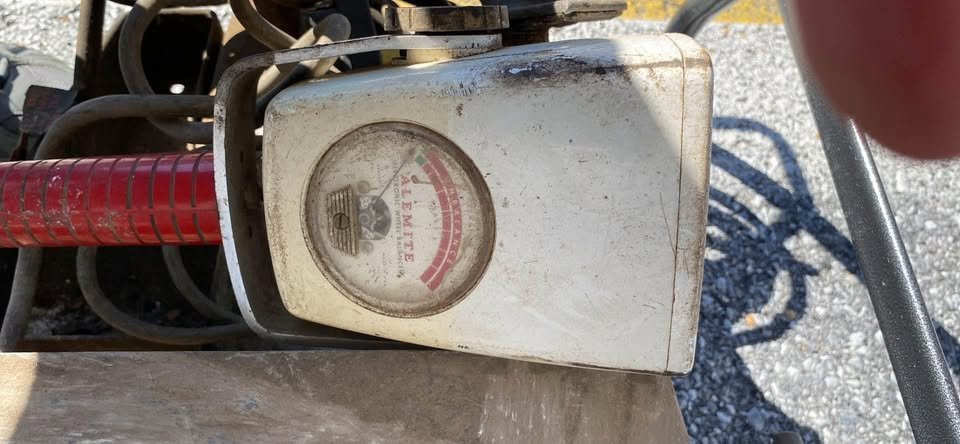
Point strobe light at COASTING wheel and watch meter. The needle will rise again. When the needle rises to its maximum reading, balancing speed has been reached.
When balancing speed has been reached, glance at the coasting wheel and note the position of the reference mark. (To remember position of reference mark, compare position to hour hand of a clock.)
- Depress brake lever to lower the brake shroud. Push the balancer toward the wheel so that the brake shroud contacts the spinning wheel squarely. Apply just enough pressure to stop the spinning wheel. AVOID ABRUPT STOPS.
- Rotate the wheel by hand until the reference mark is at the same position noted while the wheel was coasting at balancing speed.
- Apply two trial weights of equal amount. (If the needle rose beyond the mid-scale of a meter, use two 10 ounce weights. If the needle did not rise beyond the mid-scale of the meter, use lighter trial weights.)
PLACE FIRST WEIGHT ON INSIDE OF WHEEL in line with pick-up magnet. PLACE SECOND WEIGHT ON OUTSIDE OF WHEEL, 180 DEGREES FROM FIRST.