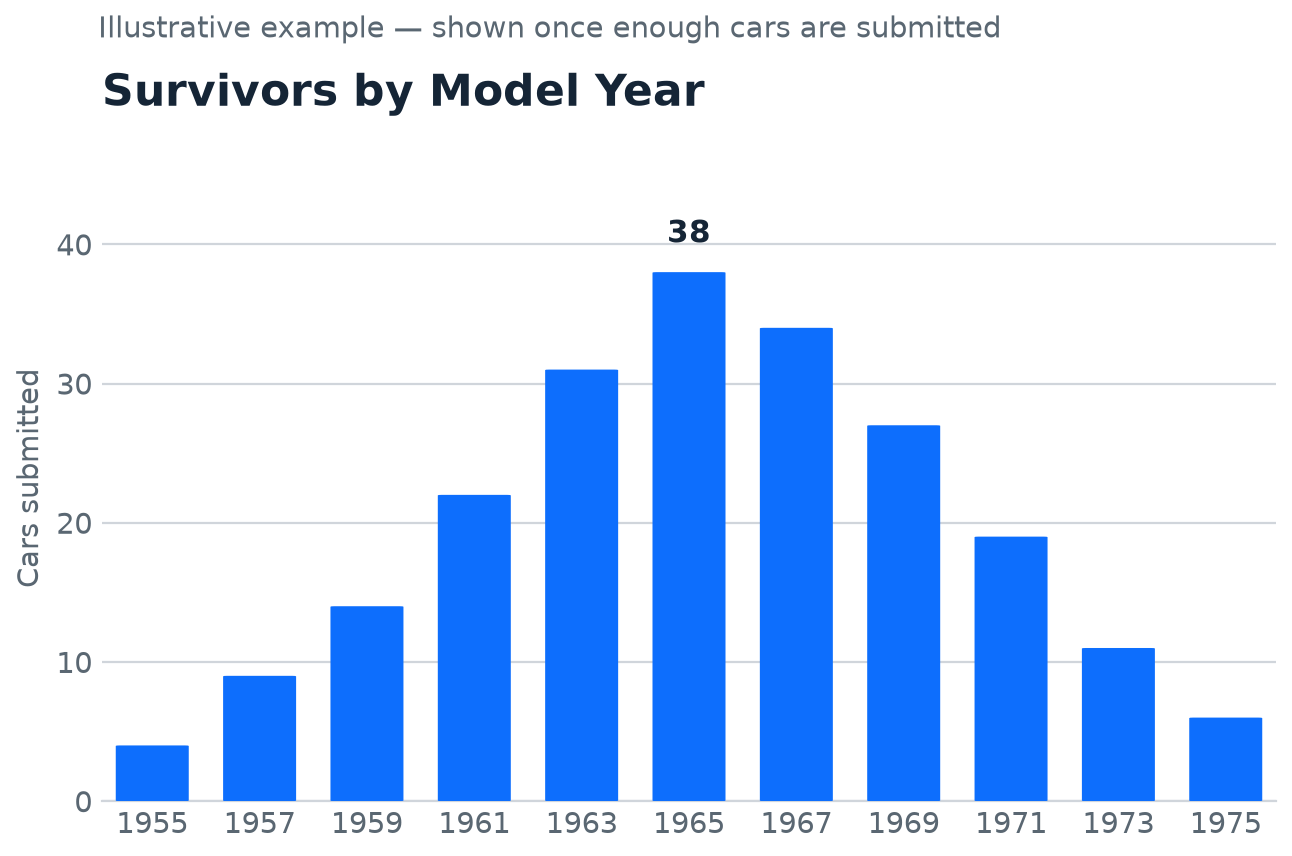
Classic Citroëns don’t come with a clear picture of how many survive, where they are, or how one example compares to the rest of its type. Production records, dealer paperwork, and factory documentation for these cars are scattered, incomplete, or simply lost — which means most owners have no real way to answer a basic question: is my car common, or is it one of a handful left?
The Citroën Registry exists to change that. It’s a community-built census of surviving classic Citroëns — organized by model, type, and variant — built from the cars owners actually have, not from guesswork.

What you’ll find here
A resource for the wider Citroën community — enthusiasts, restorers, and researchers to help answer the kinds of questions we all have about our Citroëns.
Why it matters
Every car submitted — whether it’s a well-known survivor or one nobody’s heard of before — sharpens the picture for everyone else trying to understand these cars. If you own a classic Citroën, adding yours takes a few minutes and directly improves what this resource can tell the next person who asks the same question you did.